

I always wonder the delicious taste of Puliyodharai given as prasadham especially in Perumal Kovil and Anjeneyar kovil. If we go to Nanganallur Anjeneyar temple on saturdays, we would get Puliyodharai as Prasadam which is very unique in taste. Our traditional puliyodharai does not match with this taste. I did many experiments and my family finally gave this below recipe as "Go Ahead" for Kovil Puliyodharai. Try this Kovil Puliyodharai | Temple Style Puliyodharai Rice | Tamarind Rice recipe and share your comments!
In most of the big temples, there will be a separate kitchen area where they cook the Prasadam in larger quantities everyday. I always feel like the blessing of God is the main reason for the tastier Prasadam they prepare in temple kitchen. Also when preparing large quantities of prasad, usually, they have big uruli (cooking vessel) and the rice, pongal or any other prasad is made in those urli. The open cooking process incorporates a smoky flavor that inturn enhances the flavor of the prasadam. I believe these are the main reasons for the Kovil Puliyodharai to taste more yummier when served as Prasad.There are many other variations in making the Pulikachal / Puliyodharai Rice. Some of the popular puliyodharai/pulihora rice recipes are given in the link below.
Recipe Card for Kovil Puliyodharai

Koil Puliyodharai | Temple Style Puliyodarai Rice
Servings: 4 people
Calories: 344kcal
The Puliyodharai served in the temples have a unique taste and flavor. This recipe is also commonly being referred as Iyengar Puliyodharai. It tastes divine, may be we are tasting in small quantity that too in the temple. The method of making Temple style puliyodharai is slightly different from our normal Puliyodharai. Learn to make Temple style puliyodharai with step by step pictures and video at Subbu's Kitchen.
Print Recipe
Ingredients
- 1 lemon size Tamarind
- ½ teaspoon Turmeric Powder
- 2 Red Chili
- ¼ teaspoon Asafoetida (Asafetida / Hing)
- Salt adjust to your taste
- 1 tablespoon Jaggery grated
For Grinding
- 1 teaspoon Oil
- 2 tablespoon Coriander seeds
- 6 nos Red Chili
- 1 tablespoon Split Bengal Gram (Channa Dal / Kadalaparuppu)
- 2 teaspoon Urid Dal
- ½ teaspoon Fenugreek seeds
- 1 teaspoon Peppercorns
- 2 teaspoon Sesame Seeds
For Tempering
- 2 tablespoon Gingelly Oil
- 1 teaspoon Mustard Seeds
- 2 teaspoon Split Bengal Gram (Channa Dal / Kadalaparuppu)
- 1 tablespoon Peanuts roasted
- 1 fistful Curry leaves
Instructions
- Soak the tamarind in 1 cup of water and extract the juice and keep it aside
- Heat oil in a pan, add the grinding ingredients except sesame seeds and fry it until the dals turn golden brown color
- Finally add sesame seeds and fry for 30 seconds and remove the fried ingredient from flame and allow it to cool off. The reason of adding sesame seeds at the last is that they would get burnt easily while we try frying the dals. So it should be always added last
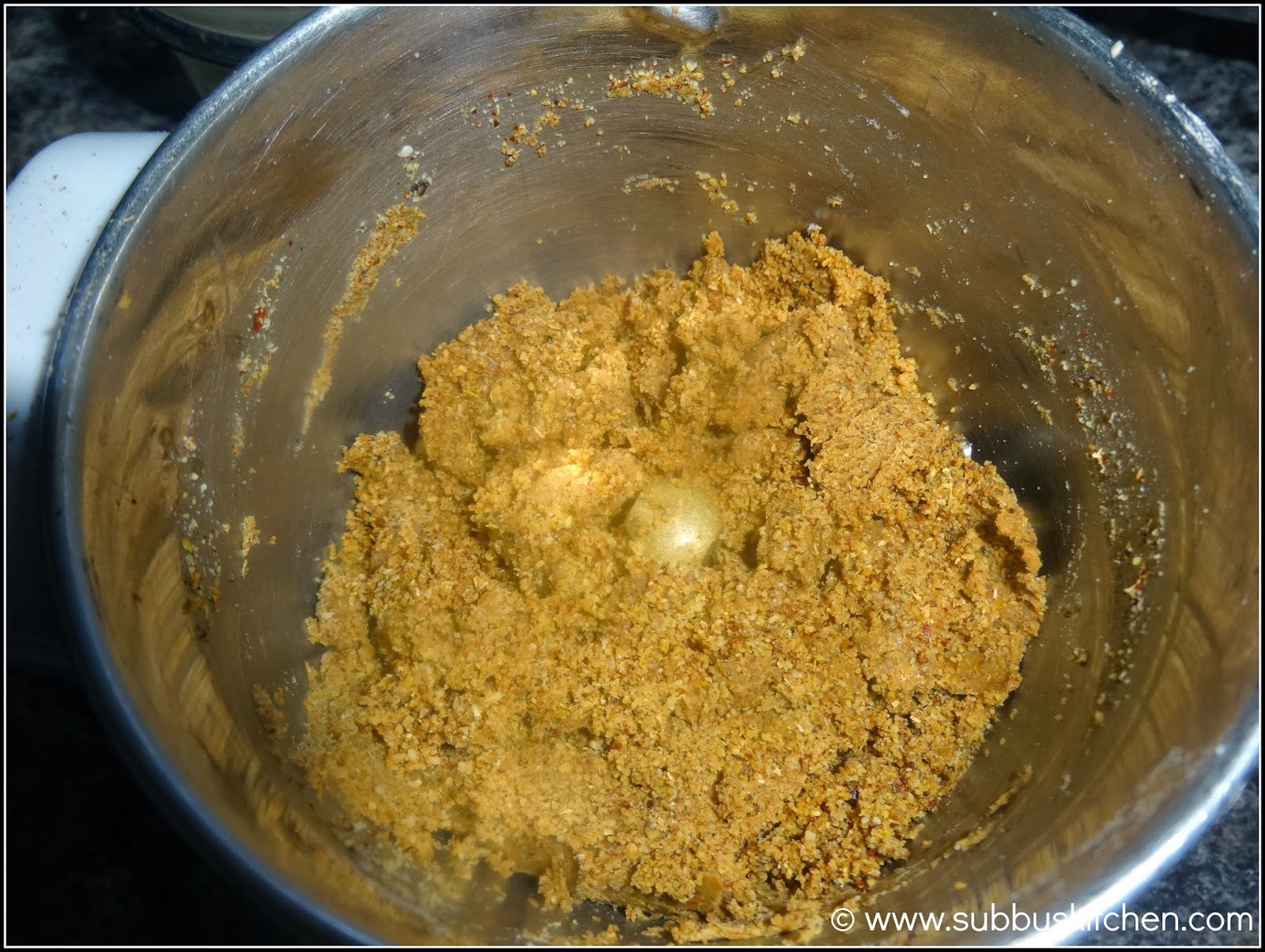
- Take the fried and cooled ingredients in a mixer and grind it to a smooth powder
- Heat gingelly oil in a pan, add mustard seeds when the oil is hot. When the mustard seeds starts to sputter, add channa dal and peanuts and fry till they turn golden brown color
- Next add broken red chillies and curry leaves and fry for another 20 seconds
- Then add extracted thick tamarind juice and add turmeric powder along with salt and hing and mix well
- Allow the tamarind mixture to boil atleast for 5 minutes to get rid off the raw smell of tamarind
- Now add the ground powder and mix well to get rid off lumps. Keep the flame in medium and allow the puliyodharai mixture to boil well and attain a thick paste like consistency
- When the Puliyodarai mixture gets thicken add jaggery and stir well, remove the pulioyodharai from flame.
- We can store the puliyodharai mixture in an air tight container and refrigerate and use it for 2-4 days. If we plan to refrigerate, then we should be generous in using gingelly oil ????
- Take cooked rice and allow it to cool off so that the rice is very fluffy. Then add the puliyodharai mixture and a teaspoon of gingelly oil and gently mix it with a wooden spatula to avoid mashing of rice.
- The yummy, spicy Kovil Puliyodharai is ready for neivedhyam and also for serving.
Video
Nutritional Info
Nutrition Facts
Koil Puliyodharai | Temple Style Puliyodarai Rice
Amount Per Serving (1 cup)
Calories 344
Calories from Fat 117
% Daily Value*
Fat 13g20%
Saturated Fat 1.5g9%
Trans Fat 0.1g
Polyunsaturated Fat 5.6g
Monounsaturated Fat 4.4g
Sodium 277mg12%
Potassium 245mg7%
Carbohydrates 51g17%
Fiber 2.5g10%
Sugar 4.5g5%
Protein 7.4g15%
Vitamin A 235IU5%
Vitamin C 45.4mg55%
Calcium 24mg2%
Iron 1.2mg7%
* Percent Daily Values are based on a 2000 calorie diet.
Tried this recipe?Mention @subbuskitchen or tag #subbuskitchen!
Subscribe to our YouTube ChannelSubscribe! to get Latest Subbuskitchen Video Recipes
Good PracticeAll the Images and videos are Copyright Protected. So please do not copy the content or images. If you want to use, please ask for it
Method:
- Soak the tamarind in 1 cup of water and extract the juice and keep it aside
- Heat oil in a pan, add the grinding ingredients except sesame seeds and fry it until the dals turn golden brown color

- Finally add sesame seeds and fry for 30 seconds and remove the fried ingredient from flame and allow it to cool off. Sesame seeds get burnt easily and that the reason of adding sesame seeds at the end of the frying process.

- Take the fried and cooled ingredients in a mixer and grind it to a smooth powder
- Heat gingelly oil in a pan, add mustard seeds when the oil is hot. When the mustard seeds starts to sputter, add channa dal and peanuts and fry till they turn golden brown color

- Next add broken red chillies and curry leaves and fry for another 20 seconds

- Then add extracted thick tamarind juice and add turmeric powder along with salt and hing and mix well
- Allow the tamarind mixture to boil atleast for 5 minutes to get rid off the raw smell of tamarind
- Now add the ground powder and mix well to get rid off lumps. Keep the flame in medium and allow the puliyodharai mixture to boil well and attain a thick paste like consistency

- When the Puliyodarai mixture gets thicken add jaggery and stir well, remove the pulioyodharai from flame.

- We can store the puliyodharai mixture in an air tight container and refrigerate and use it for 2-4 days. If we plan to refrigerate, then we should be generous in using gingelly oil 🙂

- Take cooked rice and allow it to cool off so that the rice is very fluffy. Then add the puliyodharai mixture and a teaspoon of gingelly oil and gently mix it with a wooden spatula to avoid mashing of rice. The yummy, spicy Kovil Puliyodharai is ready for neivedhyam and also for serving.


