

Ribbon Pakoda is one of the popular savories in Tamil Nadu. It's a festival delicacy and also perfect for the evening snack. Not just for festival, this is given as seer bakshnam for many auspicious occasions like marriages, seemandham etc., in Tamil Nadu. This is one of the spicy, crispy, easy to make snack.
There are multiple variations in the flours used, its proportions and ways of making Ribbon Pakoda. In this recipe below, I have adopted a Traditional way of making Ribbon Pakoda which we follow in our home for over a generation. We always get nice texture, crispier and tasty Nada. Homemade rice flour is best for this ribbon pakoda as it will give a nice texture and crispy taste. But we can very well use store bought rice flour too. Here, I have given recipe with homemade rice flour.
How to get crispier, tastier Ribbon Pakoda with right texture
- Smooth Flours - The flours should be sieved at least a couple of times. Smooth flours is very important to ensure that the Ribbon Pakoda don't burst while frying.
- Cook in Low Flame - Deep fry the ribbon padoka/Nada in low flame till it is crisp and turns light golden brown color and the bubbles starts to suppress and also the sizzling sound will come down. This is important to ensure that we get crispier Nada.
- Home made Flours - I prefer to make the flours in home as it will help to get golden, crispy and best tasting Ribbon Pakoda. We can still using store bought flours, but the quality and the taste that we get from home made flour is always superior.
- Ratio of the Flour - The ratio that i have given in the recipe gives you best tasting Nada. Please use 2 : ½ : ½ ratio for Rice Flour : Moong Flour : Gram Flour
- Butter - Adding more butter may result in nada getting dissolved while frying. Please use the the right quantity mentioned in this recipe (or less). If you are Vegan, then replace butter with hot oil.
You can also try:
- Ribbon pakoda - Quick version with Roasted Gram and Rice flour
- Mullu Thenkuzhal
- Omapodi (Sev)
- Diwali Mixture
- Karaboondhi
Recipe Card to make Ribbon Pakoda

Ribbon Pakoda | Nada | Ribbon Murukku | Ola Pakoda
Equipments Needed
- Ribbon Pakoda Press & Mould
- Heavy Bottomed Pan
Servings: 250 grams
Calories: 750kcal
Ribbon Pakoda is a famous South Indian snack usually prepared during Diwali and other festivals. It's made using Rice Flour, Channa dal & Moong dal flours. People call it by different names - Ribbon Murukku, Ola Pakoda, Nada, etc., These can be made in bulk and stored it in an air tight container to be had later. This is a perfect tea time snack.
Print Recipe
Ingredients
- 2 cups Raw Rice 1 cup = 250 ml
- ½ cup Chana Dal
- ½ cup Moong dal
- 1 teaspoon Red Chili Powder
- 2 tablespoon Butter
- 2 teaspoon Salt adjust to to your taste
- Oil for frying
- ¼ teaspoon Asafoetida (Asafetida / Hing)
Instructions
Making of the Flours
- Rinse the raw rice in water atleast couple of times. Then add fresh water to the raw rice to soak them well and leave the raw rice to get soaked for atleast an hour.
- After an hour, drain the water from rice and spread it in a clean white towel to get it dried.
- Meanwhile, Heat the pan and add channa dal and fry till the dal is hot. Keep it aside.
- Add moong dal and fry till the dal is hot. Keep it aside
- If you have an access to Rice Mill, then Mix Rice and dals and grind to a nice powder in the rice mill. If you are living abroad or you are planning to do smaller quantities, then you can grind the rice and dals in the mixer itself. First grind the dry roasted dals in the mixer to a fine powder.
- Pass the ground dal powder through the sieve to get rid of lumps. Grind the dals in batch and do the sieving process to get nice and smooth dal powder. Now, Grind the rice in the mixer to a nice powder. Normally we don’t get any lumps.
- But we should sieve it couple of time to get a smooth rice flour. If we get any lumps while we sieve, again add the lumps of rice flour to the mixer and grind it again to a smooth flour and again sieve it. Repeat the sieve process again and again till we get a smooth and nice rice flour. If we have good sunny weather, then we can spread the ground smooth rice flour in a newspaper and keep it in sun to dry the rice flour nicely.
Making Ribbon Pakoda dough
- Now mix the dal flour and the rice flour nicely and take it in a mixing bowl. To the flour, add red chilli powder, salt, butter and hing
- Add water and make the flour into a chapati like soft dough. If the dough is very hard then it will be hard for us to squeeze the press and mould. If we are making larger quantities of ribbon pakoda, then take part of the flour and then add and knead it to dough. Do not add water and mix all the flours at once.
Making of Ribbon Pakoda
- Heat oil in a heavy bottomed pan, and when the oil is hot add a little pinch of dough to check for the hotness. When the dough raises immediately then the oil is ready for frying. Put 1 hand full of dough in a press, and close the press with ribbon pakoda mold. Squeeze the dough to a big circle.
- Deep fry the ribbon padoka/Nada in low flame till it is crisp and turns light golden brown color and the bubbles starts to suppress and also the sizzling sound will come down. This is the right stage. Do not keep the flame high as it will change the color quickly but the nada would not be crispy.
- Take it out and place it in a oil strainer with a paper towel to remove excess oil and allow it to cool. Repeat the step for the rest of the dough. Store it in a air tight container and serve.
- The delicious ribbon padoka / Nada is ready to serve.
Video
Notes
- Flours should be sieved twice to get rid of any lumps. If the flours is coarse, then the ribbon pakoda will burst in oil
- We can use the same ratio (rice:chana dal:moong dal - 2: ½ : ½) for the store bought flours too
- Adjust the red chili powder according to your taste and need.
- You can replace red chili powder with Pepper powder also
- The same dough can be used to make Chakli (Murukku) as well - Refer the link below for how to make both Chakli & Nada using the same dough. https://www.youtube.com/watch?v=yzKzAWVeLJI
Nutritional Info
Nutrition Facts
Ribbon Pakoda | Nada | Ribbon Murukku | Ola Pakoda
Amount Per Serving (100 g)
Calories 750
Calories from Fat 486
% Daily Value*
Fat 54g83%
Saturated Fat 32g200%
Sodium 42mg2%
Carbohydrates 60g20%
Protein 10g20%
* Percent Daily Values are based on a 2000 calorie diet.
Tried this recipe?Mention @subbuskitchen or tag #subbuskitchen!
Subscribe to our YouTube ChannelSubscribe! to get Latest Subbuskitchen Video Recipes
Good PracticeAll the Images and videos are Copyright Protected. So please do not copy the content or images. If you want to use, please ask for it
Method with Step by Step Pictures :
- Rinse the raw rice in water atleast couple of times. Then add fresh water to the raw rice to soak them well and leave the raw rice to get soaked for atleast an hour. After an hour, drain the water from rice and spread it in a clean white towel to get it dried.


- Meanwhile, Heat the pan and add channa dal and fry for some time till the dal is hot. Keep it aside. Add moong dal and fry for some time till the dal is hot. Keep it aside


- Mix Rice and dals and grind to a nice powder it in rice mill. If you are living abroad or you are planning to do smaller quantities, then you can grind the rice and dals in the mixer itself. First grind the dry roasted dals in the mixer to a fine powder. Pass the ground dal powder through the sieve to get rid of lumps. Grind the dals in batch and do the sieving process to get nice and smooth dal powder. Now, Grind the rice in the mixer to a nice powder. Normally we don't get any lumps.

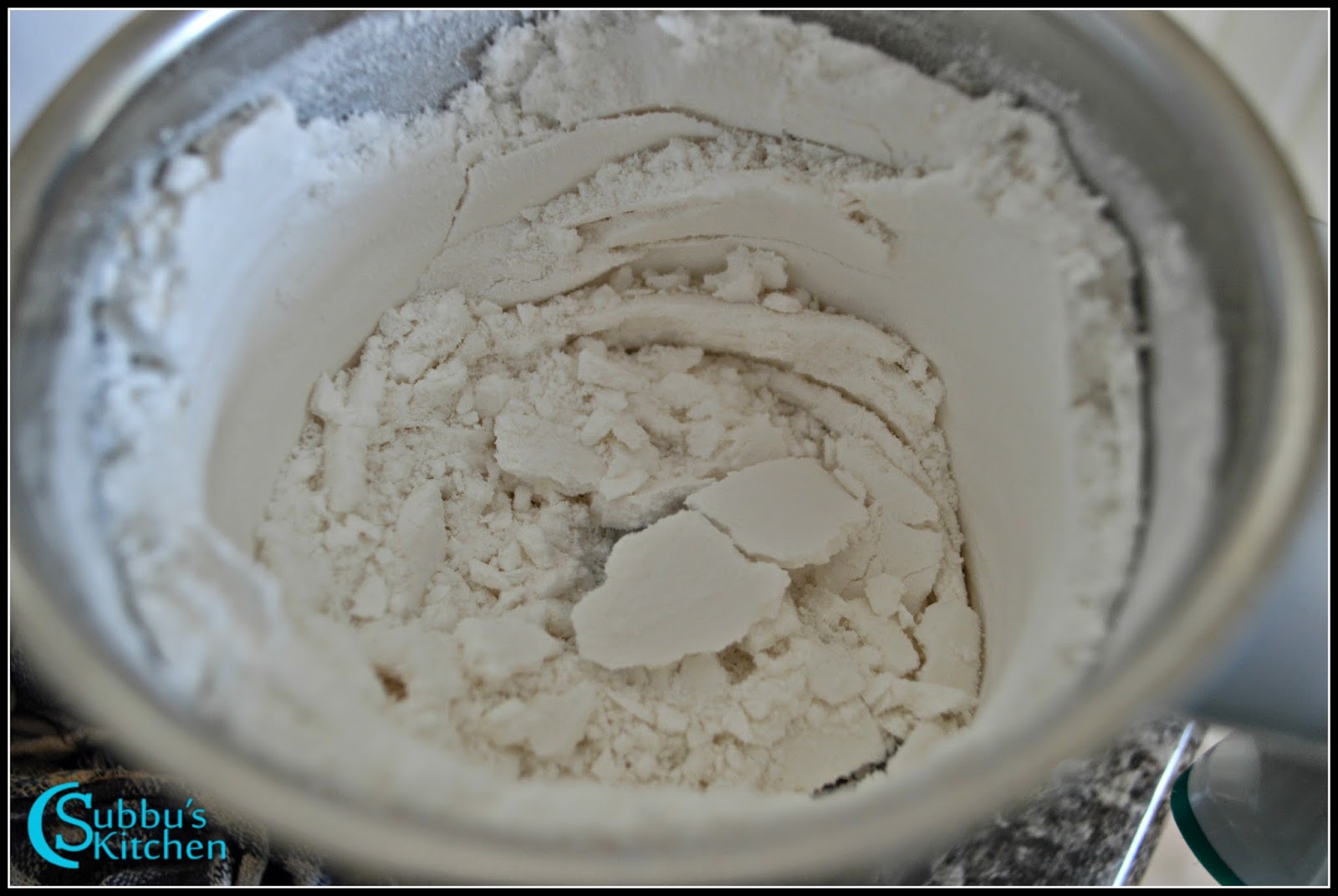
- But we should sieve it couple of time to get a smooth rice flour. If we get any lumps while we sieve, again add the lumps of rice flour to the mixer and grind it again to a smooth flour and again sieve it. Repeat the sieve process again and again till we get a smooth and nice rice flour. If we have good sunny weather, then we can spread the ground smooth rice flour in a newspaper and keep it in sun to dry the rice flour nicely.
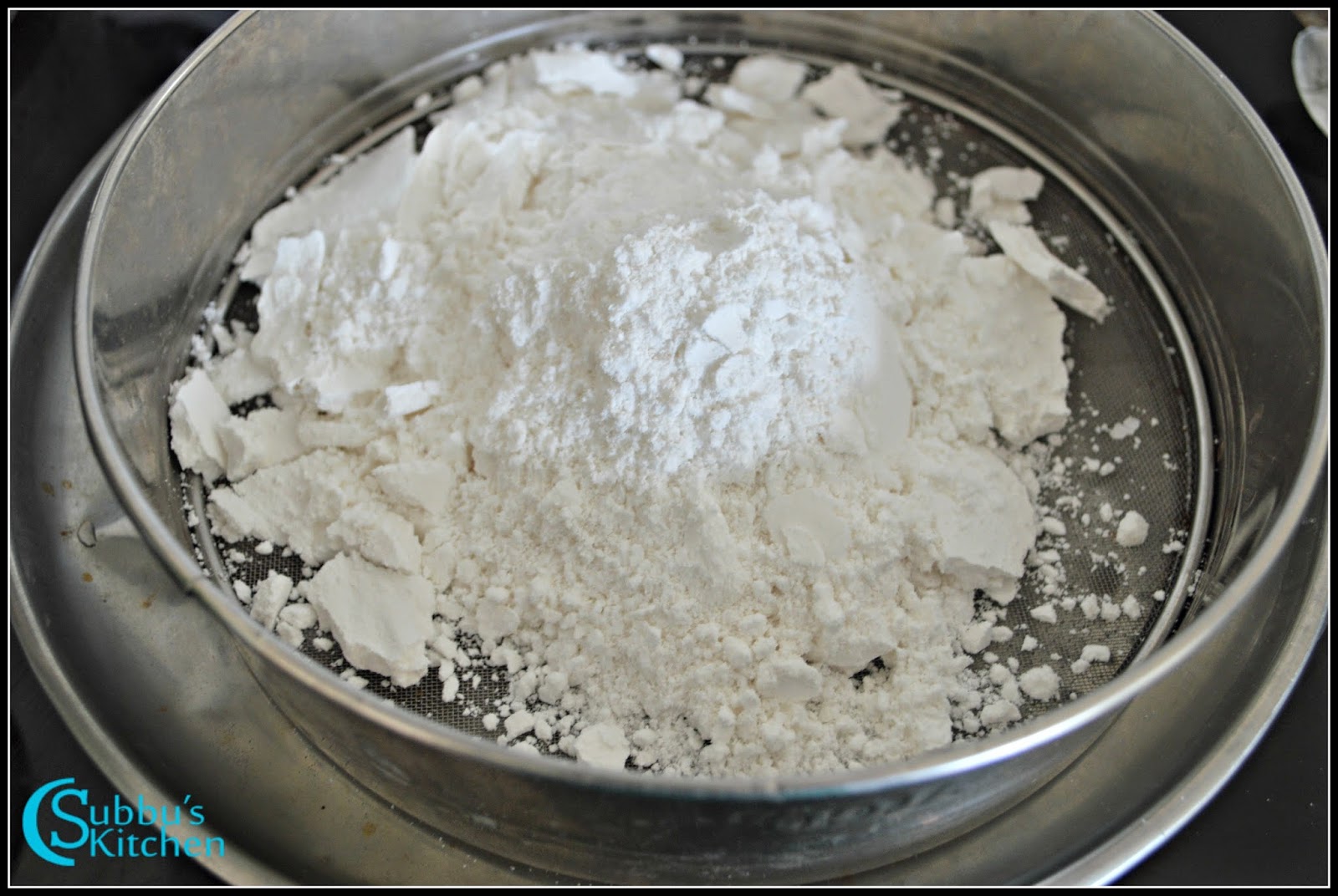
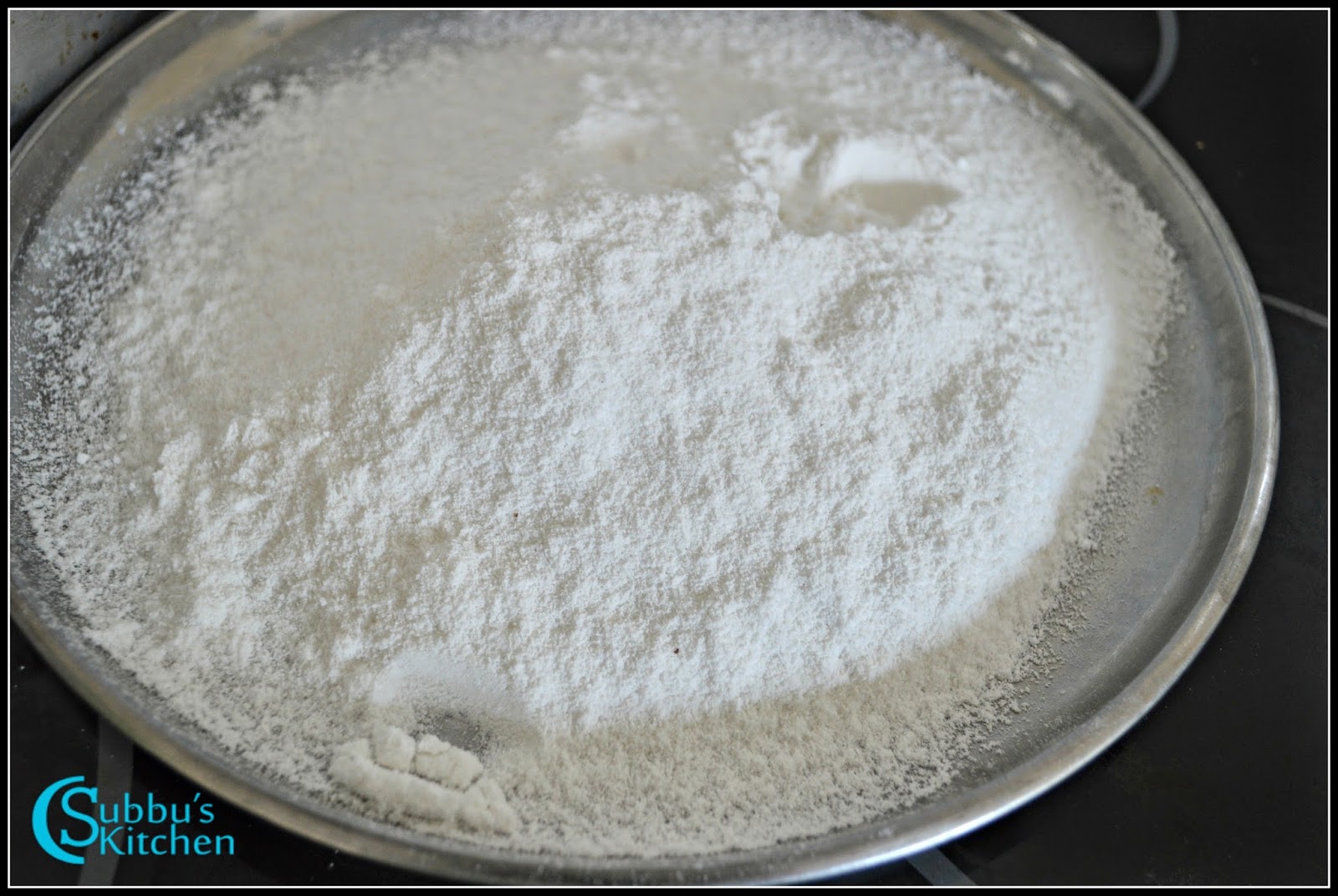
- Now mix the dal flour and the rice flour nicely and take it in a mixing bowl. To the flour, add red chilli powder, salt, butter and hing


- Add water and make the flour into a chapati like dough. Heat oil in a heavy bottomed pan, and when the oil is hot add a little piece of dough to check for the hotness. When the dough raises immediately then the oil is ready for frying. Put 1 hand full of dough in a press, and close the press with ribbon pakoda mould. Squeeze the dough to a big circle. Deep fry the ribbon padoka/Nada in low flame till it is crisp and turns light golden brown color and the bubbles starts to suppress and also the sizzling sound will come down. This is the right stage. Do not keep the flame high as it will change the color quickly but the nada would not be crispy.


- Take it out and place it in a oil strainer with a paper towel to remove excess oil and allow it to cool. Repeat the step for the rest of the dough. Store it in a air tight container and serve.
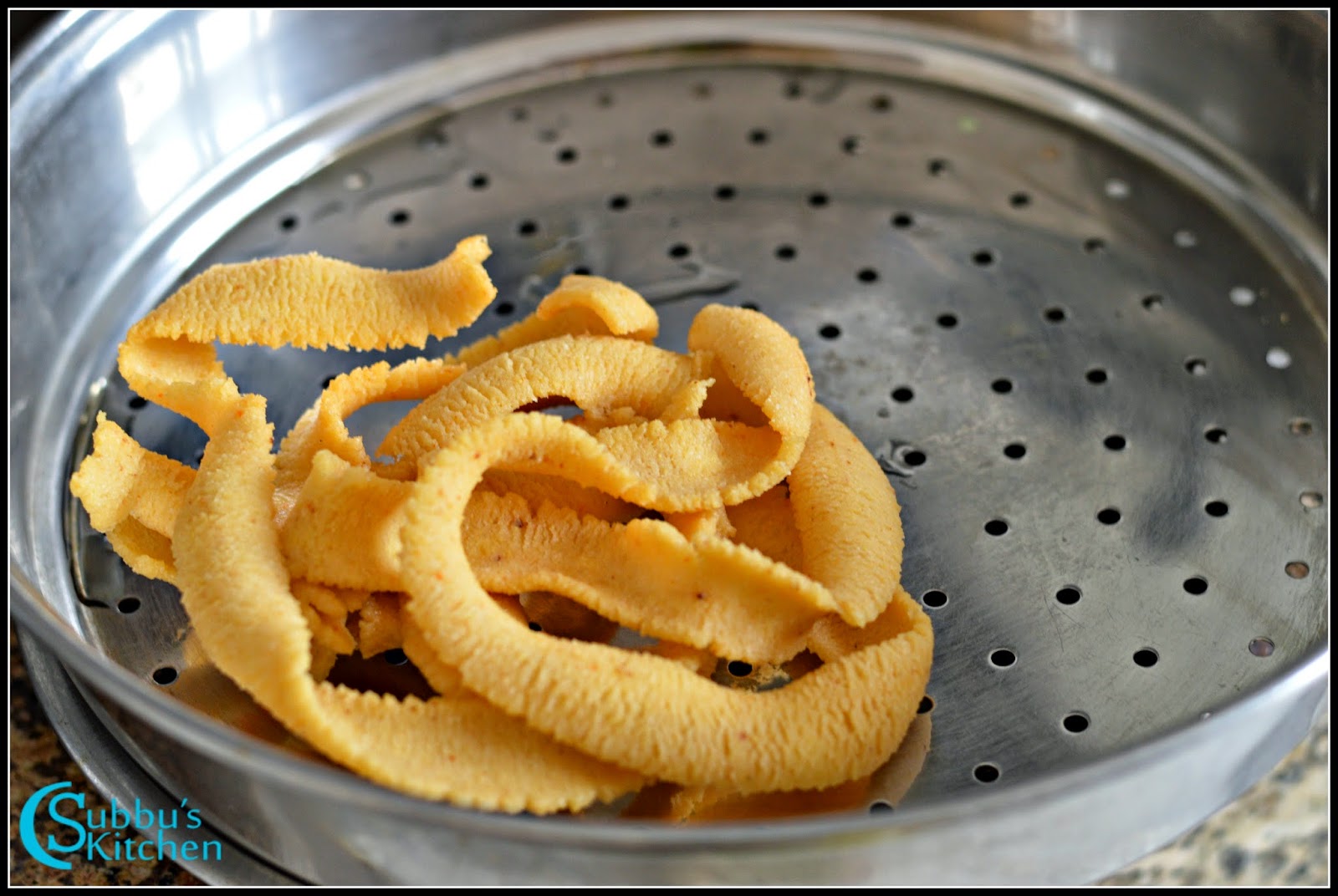
- The delicious ribbon padoka/Nada is ready to serve.

