

Varalakshmi Vratham, also known as Varalakshmi Pooja, is an auspicious Hindu festival dedicated to Goddess Varalakshmi, a form of Goddess Lakshmi, the goddess of wealth, prosperity, abundance and well-being.
This sacred Vratham is traditionally observed by women, particularly in Tamil Nadu, Andhra Pradesh, Telangana, Karnataka and other parts of South India. It is usually performed on the Friday before the full moon day (Pournami) in the month of Shravanam/Aavani.
The word Varalakshmi comes from Vara, meaning boon or blessing, and Lakshmi, the goddess of prosperity. Devotees worship Goddess Varalakshmi seeking her blessings for the health, happiness, prosperity and well-being of the family.
At Subbus Kitchen, I have shared the traditional Varalakshmi Vratham procedure, preparation, pooja items, neivedhyam and Punar Pooja based on the customs followed in our family. Practices can vary from family to family and region to region, so you can follow the traditions customary in your household.
Significance of Varalakshmi Vratham
According to the traditional legend, Goddess Varalakshmi appeared in the dream of a devoted woman named Charumathi and blessed her for her devotion. The Goddess instructed her to perform the Varalakshmi Vratham and worship her with devotion.
Varalakshmi is considered a manifestation of Goddess Lakshmi. Worshipping her on this auspicious day is believed to bring blessings associated with wealth, prosperity, health, happiness, family well-being and abundance.
There are no restrictions based on caste or creed for observing the Vratham. The most important aspect of the worship is devotion and sincerity.
Varalakshmi Vratham – Preparations
The preparations for Varalakshmi Vratham usually begin a day or two in advance.
On the day of the Vratham, women traditionally wake up early, clean the house and decorate the entrance with a beautiful kolam/rangoli. After taking an oil bath, they wear traditional clothes and jewellery and begin preparing the pooja arrangements and neivedhyam.
One of the most important preparations is decorating the Varalakshmi Amman and the kalasam.
In many South Indian families, a silver Varalakshmi face (Amman Mugham) is used for the pooja. Families who do not have a silver face can follow the form of worship customary in their household.
How to Decorate Varalakshmi Amman
Take a thambalam (large plate) and place a banana leaf over it.
Spread approximately one cup of raw rice evenly over the banana leaf.
Place a silver sombu or kalasam over the rice. Decorate the kalasam with sandalwood paste and kumkum.
Fill the kalasam with water or rice, depending on your family tradition. Add items such as:
- Coins
- Turmeric
- Betel leaves
- Betel nuts
Take a coconut, apply turmeric over it and place it over the kalasam.
The coconut is then decorated with traditional items such as bangles and a blouse piece or saree material. Place the Varalakshmi Amman face over the coconut and secure it carefully so that it remains stable.
Decorate Goddess Varalakshmi with:
- Flowers
- Garlands
- Jewellery
- Gold chains
- Bangles
- Traditional ornaments
A panju thiri malai (cotton wick garland) is considered particularly auspicious in our family tradition.
Prepare a small table or mantap for the Goddess with thorans and mango leaves (maavilai). Place the decorated kalasam carefully inside the mantap.
Bringing Varalakshmi Amman into the Pooja Room
On the morning of the Vratham, the decorated Amman is traditionally brought into the house with devotion.
Clean the entrance, sprinkle water and draw a beautiful kolam. Place the decorated Amman thambalam near the entrance and traditionally sing:
“Varalakshmi Ra Ve Ma Intiki”
The Amman is then gently carried into the pooja room and placed on the prepared mantap.
This is one of the most beautiful and meaningful moments of the Vratham.
Varalakshmi Vratham Pooja Items
It is best to keep all the pooja items ready before beginning the pooja so that you do not have to interrupt the rituals.
Basic Pooja Items
- Coconut
- Betel leaves and betel nuts
- Turmeric
- Kumkum
- Raw rice
- Flowers
- Lotus petals, if available
- Sev arali (oleander) flowers, traditionally considered auspicious
- Fruits – preferably five varieties
- Banana
- Sandalwood paste
- Akshata
- Oil/ghee lamps
- Incense
- Camphor
- Water
- Spoon
- Thambalam
- Kalasam
- Varalakshmi Amman face
- Mango leaves
- Thoram
- Nonbu Saradu – sacred yellow thread
- Neivedhyam
Varalakshmi Vratham Neivedhyam
Different families prepare different dishes for Varalakshmi Vratham.
In our tradition, some of the commonly prepared neivedhyam items include:
- Cooked rice with dal and ghee
- Pacharisi Idli
- Kozhukattai
- Payasam
- Vadai
- Sundal
- Appam
- Fruits
- Coconut
You can prepare the dishes according to your family tradition and convenience.
Performing Varalakshmi Pooja
The complete Varalakshmi Pooja can be performed with the guidance of a priest or by following a traditional pooja procedure.
Families living outside India may find it convenient to follow a recorded pooja, book a priest or use a traditional Lakshmi Pooja guide.
If you have limited time, you can also chant Sri Lakshmi Ashtothram with devotion, offering flowers to Goddess Varalakshmi for each name.
The important thing is to perform the pooja with sincerity and devotion.
1. Vinayaka Pooja
Before beginning the Varalakshmi Pooja, it is customary to worship Lord Ganesha.
Take a betel leaf and place it with the pointed end facing north.
Make a small mound using turmeric mixed with a little water and place it in the center of the betel leaf. Apply a little kumkum on top.
Offer flowers and akshata while chanting the traditional names of Lord Ganesha.
After completing Vinayaka Pooja, move the betel leaf to the north side and begin the Varalakshmi Pooja.
2. Varalakshmi Pooja
Begin the Varalakshmi Pooja with the traditional Sankalpam, followed by the various steps of the pooja according to your family tradition.
Offer:
- Flowers
- Akshata
- Kumkum
- Turmeric
- Sandalwood
- Fruits
- Neivedhyam
Chant the Lakshmi Ashtothram or other traditional Lakshmi prayers while offering flowers to Goddess Varalakshmi.
Once the pooja is complete, offer the prepared neivedhyam and perform Maha Deepa Aradhanai.
Traditional Varalakshmi Neivedhyam
Some traditional neivedhyam names mentioned in the pooja tradition are:
| Traditional Name | Neivedhyam |
|---|---|
| Salyannam | Plain cooked rice |
| Kruthakula Payasam | Paruppu Payasam |
| Mashapupam | Ulundhu Vadai |
| Kudapupam | Appam |
| Lattugam | Pacharisi Idli |
| Sanagam | Kondaikadalai Sundal |
| Modhagam | Kozhukattai |
| Nalikerakandam | Coconut |
| Kathalepalam | Banana |
| Patharepalam | Ilandhai Pazham |
| Jambubalam | Naval Pazham |
| Peejapurapalam | Guava |
| Narthapalam | Orange / Sweet Lime |
You don't necessarily need to prepare every item listed above. The neivedhyam varies according to family tradition, region and availability.
Nonbu Saradu – Tying the Sacred Thread
After completing the neivedhyam and Deepa Aradhanai, women in the family traditionally tie the Nonbu Saradu, a sacred yellow thread associated with the Vratham.
The thread is usually prepared with a small flower tied in the middle.
In our family tradition, the Nonbu Saradu is placed at the feet of Goddess Varalakshmi during the pooja so that it receives the Goddess's blessings.
Traditionally, an elder married woman in the family ties the sacred thread on her right hand, often with the help of her husband. She then helps tie the threads for other women and unmarried girls in the family.
As the thread is tied, everyone prays to Goddess Varalakshmi for her blessings.
Saradu Kattum Slokam
Before tying the Nonbu Saradu, prepare a thambalam with:
- Coconut
- Fruits
- Betel leaves and betel nuts
- Turmeric
The traditional sloka chanted while tying the sacred thread is:
“Navathanthu Samayuktham
Navakranthi Samanvitham
Pathneeyam Thakshanye Hasthey
Thoragam Harivallabhey”
The thread is first tied to the elder woman in the family, followed by the other women and girls observing the tradition.
Giving Thamboolam
It is customary to invite married women to the home in the evening and offer Thamboolam as a gesture of respect and goodwill.
A typical Thamboolam may include:
- Betel leaves
- Betel nuts
- Turmeric
- Kumkum
- Fruits
- Coconut
- Flowers
- Sweets
- Sundal
Depending on the family tradition, additional items may also be included.
The evening is usually filled with devotional songs, conversation and prayers.
Dinner on Varalakshmi Vratham Day
Food traditions vary considerably between families.
In our family tradition, women observing the Vratham traditionally avoid regular rice-based dinner and have a light tiffin instead.
The neivedhyam items themselves may be served as dinner.
I remember my mother having Pacharisi Idli for dinner on Varalakshmi Vratham day.
These small family traditions are what make festivals particularly special and memorable.
Punar Pooja – The Following Day
The day after Varalakshmi Vratham, we traditionally perform Punar Pooja.
Prepare a simple neivedhyam, usually fruits, for Goddess Varalakshmi.
Chant Lakshmi Ashtothram and perform Deepa Aradhanai.
Then chant the traditional Punar Pooja mantra while offering flowers and akshata at the feet of the Goddess:
“Asmath Kumbath Sri Varalakshmem
Yadhasthanam Pradhishtapayami
So' Panarthey Kshemaya
Punaragamanaya Cha”
After chanting the mantra, gently move the kalasam towards the north direction while offering flowers and akshata.
Devotional songs can be sung as the kalasam is moved.
According to our family tradition, before going to sleep, the Amman kalasam is carefully moved and kept inside the rice container/storage.
The coconut used in the kalasam can be used later according to your family tradition. In our family, we traditionally use it to prepare payasam the following Friday.
Varalakshmi Vratham Recipes
Here are some of the traditional recipes that can be prepared as Varalakshmi Vratham neivedhyam or prasadam:
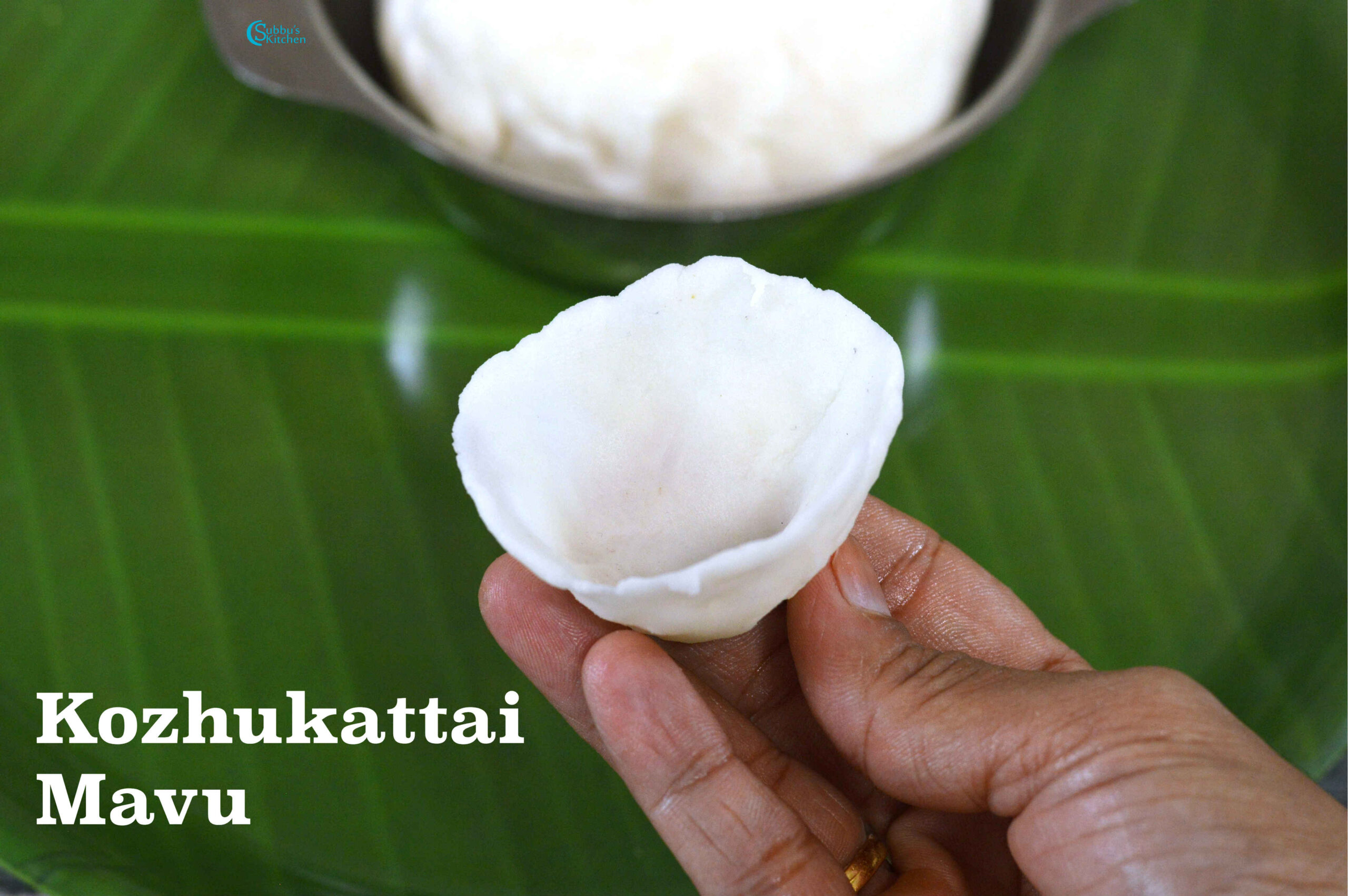
- Kozhukattai Recipe | How to make Kozhukattai with Coconut Filling ?
- Kozhukattai Maavu using Rice Batter | Foolproof Method
- Pasi Paruppu Pradaman | Moongdal Coconut Milk Payasam
- Kadala Paruppu Thengai Payasam
- Ulundhu Vadai | Medhu vadai | Urad dhal Vada
- Pacharisi Idly ( Raw rice Idly)
- Kondakadalai Sundal | Chickpeas Sundal |Chole Sundal
- Sakkarai Pongal / Sweet Rice Pongal



A Note About Varalakshmi Vratham Traditions
Varalakshmi Vratham is celebrated differently across families and regions. The pooja procedure, mantras, neivedhyam and customs may vary.
The procedure shared here follows the traditions practiced in our family and is intended as a helpful reference for those who would like to understand or follow this tradition.
If you have a family priest or follow a particular sampradaya, it is best to follow the procedure prescribed by them.
The beauty of Varalakshmi Vratham is not only in the elaborate decorations and delicious neivedhyam, but in coming together as a family, praying with devotion and seeking the blessings of Goddess Varalakshmi.
May Goddess Varalakshmi bless you and your family with health, happiness, prosperity and abundance. 🙏


